

Clinician. Educator. Self-explorer. Surfer.




Clinical Foundations

I’ve found that the greatest breakthroughs—for both my patients and myself—come from adopting healthy habits that support the body’s natural ability to self-correct, restore balance, and sustain long-term well-being. My approach is grounded in four key constructs:
 Fascia is the body’s primary operating system.
The body is a self-regulating biological supercomputer.
Inner awareness drives meaningful change.
Self-care is the foundation of lasting wellness.
Fascia is the body’s primary operating system.
The body is a self-regulating biological supercomputer.
Inner awareness drives meaningful change.
Self-care is the foundation of lasting wellness.
Fascia is the body’s primary operating system.
The body is a self-regulating biological supercomputer.
Inner awareness drives meaningful change.
Self-care is the foundation of lasting wellness.
Fascia is the body’s primary operating system.
The body is a self-regulating biological supercomputer.
Inner awareness drives meaningful change.
Self-care is the foundation of lasting wellness.
The Art and Science of Fascia
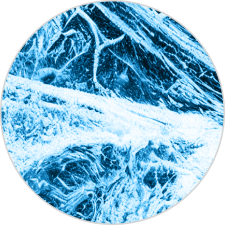
Fascia is far more than connective tissue—it’s a living, adaptive, bioelectric network that wraps and communicates with every muscle, organ, and cell. From the start of my career, I had the unique privilege of learning from my father, John F. Barnes, whose pioneering work in Myofascial Release shaped both the field and my own clinical foundation. His mentorship taught me to see fascia as the body’s primary integrative system—a place where mechanics, fluid dynamics, and neurophysiology meet.
In my article “The Basic Science of Myofascial Release: Morphologic Change in Connective Tissue,” I explored how fascia adapts and reorganizes in response to sustained pressure and mindful input. This science helps explain the profound whole-body changes we see clinically being improved movement, reduced pain, emotional release, and restored balance.
Myofascial Release remains a cornerstone of my practice, not merely as a technique but as a framework for understanding how healing occurs. By working through the fascial–nervous system, we’re tuning the body’s operating system—supporting self-correction, regulation, and lasting change.
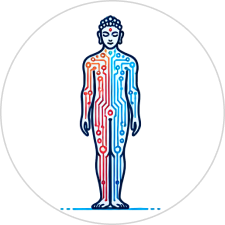
In my many years of self-exploration and clinical practice, I have come to deeply embrace the concept of the soma—the living body as experienced from within—and the practical application of Somatics. My approach has been shaped and inspired by early pioneers such as Thomas Hanna, Moshe Feldenkrais, and F. M. Alexander, whose work illuminated the body’s innate capacity for awareness, learning, and self-correction.
I believe the soma is a profoundly intelligent system. It is constantly sensing, adapting, and reorganizing in response to its environment. What we perceive as pain, restriction, or imbalance is often the body’s best attempt to maintain stability with the information it has.
The science of Somatics helps us understand this inner communication network: the dynamic interplay of fascia, the nervous system, and the extracellular matrix. Together, they form a living feedback system, continuously exchanging information and shaping posture, breath, and perception.
As a clinician, I do not see my role as fixing the body, but as restoring the conditions for it to self-regulate. When awareness, safety, and movement align, the soma remembers its own coherence. Healing emerges not from force, but from allowing the body’s innate intelligence to reorganize from the inside out.

I am That
My work as a clinician is rooted in my own search for healing and self-understanding. During a time when I needed to reconnect with my body, I began practicing a breath meditation called Hamsa, taught by Swami Muktananda. He taught that the mind often creates false stories about who we are, and that breath can guide us back to a more grounded, authentic sense of self. The simple rhythm of “Ham” on the inhale and “Sa” on the exhale became a steady reminder to return to presence.
This experience sparked a deeper curiosity in how our inner narratives shape our physiology. I came to see that our stories don’t just live in the mind, they live in the fascia and nervous system. They influence how we breathe, move, and respond to stress.
This understanding guides my work today. I believe healing begins when we reconnect with the sensations and patterns held within the body. Through gentle, sustained work with the fascial and neural systems, I help people shift from tension to flow and from protection to presence. When those patterns change, the whole system can reorganize. Healing isn’t something done to the body; it’s something we create the conditions for as the body remembers its capacity for coherence, safety, and change.
In my own healing process from back pain and in guiding countless patients through their chronic pain journeys, I’ve come to recognize that self-care is not an accessory to treatment, but the foundation of health and even personal transformation. When patients learn to listen to their bodies and participate in their own healing, the trajectory of their recovery changes.
Self-Care as Medicine represents a timely evolution in how we understand health and healing. In today’s healthcare landscape where chronic stress, pain, and lifestyle-driven conditions dominate. I’ve seen over and over again, meaningful progress occurs when patients are empowered to become active participants in their own care. By placing self-care at the forefront of treatment, we transform healing from something that happens to the body into something that happens through it.
This somatic, science-based approach helps patients reconnect with their body’s innate intelligence through breath, movement, awareness, and daily habits. These regulate the fascia–nervous system and build resilience. For providers, it reframes care as a partnership that bridges evidence-based methods with human experience, catalyzing lasting behavior change and ushering in a more personal, humane, and effective paradigm of health.
Free eBook
Boost Client Retention by Treating the Whole Person
The Somatic Advantage
Download our free eBook to discover how resetting the body’s main operating system drives deeper healing and lasting client retention.